


Introduction: A Quiet but Fundamental Shift
For decades, biomass has been framed as a renewable energy solution – a way to replace fossil fuels with organic material and reduce emissions in power generation and heating. That narrative is now outdated. What is emerging instead is a fundamentally different role for biomass: not as an energy substitute, but as a strategic carbon resource embedded in multiple high-value systems. This shift is not being loudly announced. It is unfolding quietly – across conference agendas, investment flows, policy frameworks, and industrial strategies.
If you look closely at the structure of today’s biomass industry, one thing becomes clear: energy is no longer the center of gravity.
From Combustion to Carbon Value Chains
Historically, biomass utilization was straightforward. Organic material was burned to produce heat and power, often supported by subsidies designed to accelerate renewable energy deployment. The value proposition was simple: replace fossil carbon with biogenic carbon. Today, this logic is being replaced by a more complex framework. Biomass is increasingly processed not for energy alone, but for molecules, carbon intensity optimization, and long-term carbon storage. Instead of being combusted, biomass is:
- Converted into sustainable aviation fuel (SAF)
- Processed into renewable chemicals and materials
- Transformed into biochar for carbon removal
- Integrated into low-carbon fuel standards and carbon markets
This evolution reflects a broader transition from linear energy systems to multi-output carbon value chains, where the same feedstock can generate fuels, materials, energy, and carbon credits simultaneously.
The Conference Signal: What the Agenda Reveals
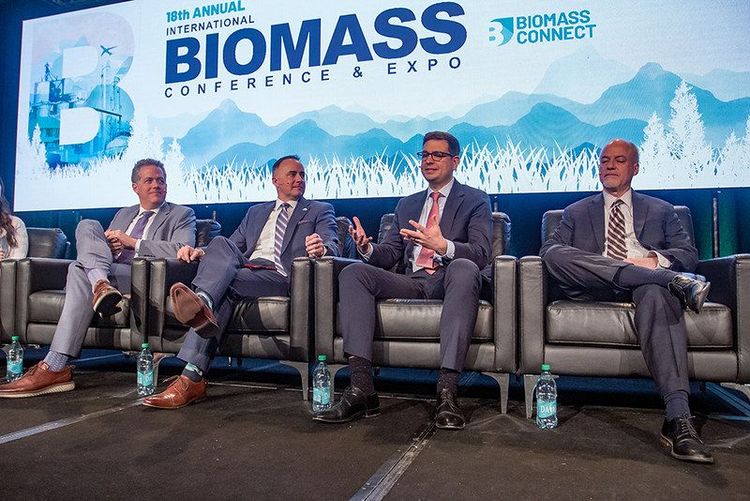

A close reading of the agenda of the Biomass Conference & Expo (https://www.biomassconference.com/ema/DisplayPage.aspx?pageId=Agenda_Biomass_Conference___Expo) reveals this shift clearly.
The dominant themes are no longer limited to traditional bioenergy topics. Instead, they cluster around:
- Advanced fuels, particularly SAF
- Feedstock logistics and supply chains
- Carbon intensity and lifecycle emissions
- Policy frameworks and market incentives
- Emerging carbon removal pathways
What is striking is not any single topic, but the interconnectedness of all of them. Sessions on feedstock are no longer just about availability – they are about strategic allocation. Discussions on fuels are inseparable from carbon accounting frameworks. Technology panels are increasingly focused on deployment and integration, not innovation alone. In other words, the agenda does not describe an energy sector. It describes a system under transformation.
The Rise of Carbon as the Primary Value Driver
One of the most important developments in this transition is the shift in how biomass is valued. Historically, its value was tied to its energy content. Today, it is increasingly tied to its carbon characteristics.
This is driven by several converging forces:
- Low Carbon Fuel Standards (LCFS) and similar mechanisms
- Corporate net-zero commitments
- Voluntary carbon markets
- Emerging compliance markets for carbon removal
Under these frameworks, the key question is no longer “How much energy does this biomass produce?” but rather:
👉 What is the carbon intensity of the pathway?
👉 How much carbon can be avoided or permanently removed?
This shift fundamentally changes investment decisions. A pathway that yields slightly less energy but significantly better carbon performance can now be economically superior. Biochar, for example, may generate less immediate energy value than combustion, but its ability to create durable carbon removal credits transforms its economic profile entirely.
Relevant frameworks and developments include:
- EU Carbon Removal Certification Framework
https://climate.ec.europa.eu/eu-action/carbon-removal_en - Voluntary carbon markets (e.g., Puro.earth)
Integration Instead of Substitution
Another critical change is the role biomass plays within broader industrial systems. It is no longer positioned as a standalone substitute for fossil fuels, but as a flexible input into integrated value chains.
For example:
- In aviation, biomass-derived fuels are one of the few viable pathways to decarbonization, making them strategically indispensable.
- In the chemical industry, biomass offers a route to renewable carbon feedstocks that cannot be electrified.
- In agriculture, biochar integrates carbon removal with productivity gains.
This integration creates a new form of resilience. Instead of relying on a single market (e.g., electricity), biomass can flow into whichever application offers the highest value – whether economic, regulatory, or environmental.
The Implicit Tension: Competing Uses of a Finite Resource
However, this transformation also introduces a structural tension that is still underappreciated. Biomass is not unlimited. As demand grows across multiple sectors – energy, fuels, chemicals, and carbon removal – competition for sustainable feedstock is intensifying. What was once a relatively abundant and underutilized resource is becoming strategically constrained.
This has several implications:
- Prices for high-quality feedstock are likely to rise
- Supply chains will become more complex and contested
- Allocation decisions will increasingly be influenced by policy and carbon accounting frameworks
The industry is moving toward a reality where biomass is not just a renewable input, but a scarce strategic resource.
What This Means for Industry and Policy
For industry players, the shift from energy to carbon value chains requires a rethinking of strategy. Success will depend not only on technology, but on:
- Securing reliable feedstock supply
- Optimizing carbon performance
- Integrating into policy and market frameworks
For policymakers, the challenge is even more complex. Supporting biomass deployment now involves balancing:
- Climate objectives
- Land use considerations
- Industrial competitiveness
- Resource allocation across sectors
Poorly designed policies risk locking biomass into low-value uses, while well-designed frameworks can direct it toward applications with the highest climate impact.
Conclusion: A New Role for Biomass
The biomass sector is undergoing a transformation that is easy to overlook because it is not driven by a single breakthrough technology. Instead, it is the result of multiple forces converging: carbon markets, policy frameworks, industrial demand, and technological maturity. The outcome is a redefinition of biomass itself.
It is no longer just a source of renewable energy.
It is becoming a central component of carbon management systems.
This shift has profound implications – not only for how biomass is used, but for how it is valued, regulated, and contested. The question is no longer whether biomass will play a role in the energy transition.
👉 The question is: where in the emerging carbon economy it will be allocated and who will control it.
Sources
- Biomass Conference & Expo Agenda
https://www.biomassconference.com/ema/DisplayPage.aspx?pageId=Agenda_Biomass_Conference___Expo - European Commission – Carbon Removal
https://climate.ec.europa.eu/eu-action/carbon-removal_en - Puro.earth
https://puro.earth - International Biochar Initiative
https://biochar-international.org - IPCC Reports
https://www.ipcc.ch