
Introduction: A Rediscovered Technology at the Center of Climate Strategy
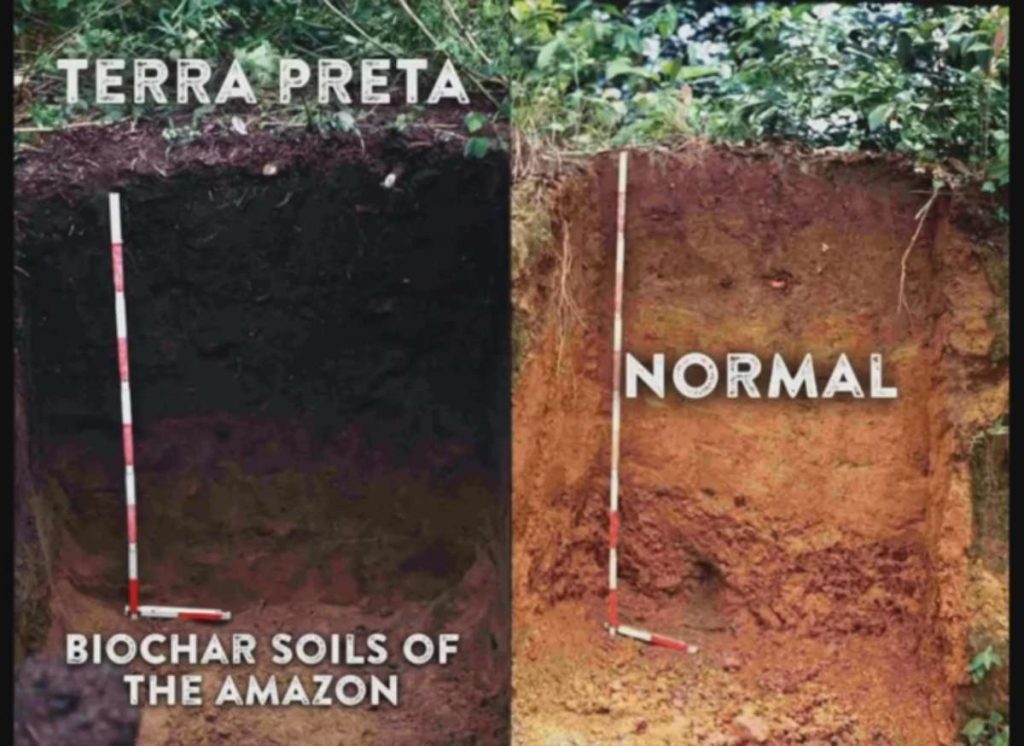
Biochar is often described as an ancient technology rediscovered for modern climate challenges – but this framing understates its current significance. What began as a soil-enhancing practice in the Amazon basin, known through the fertile Terra Preta soils, is now emerging as one of the most credible and immediately deployable carbon removal solutions available today.
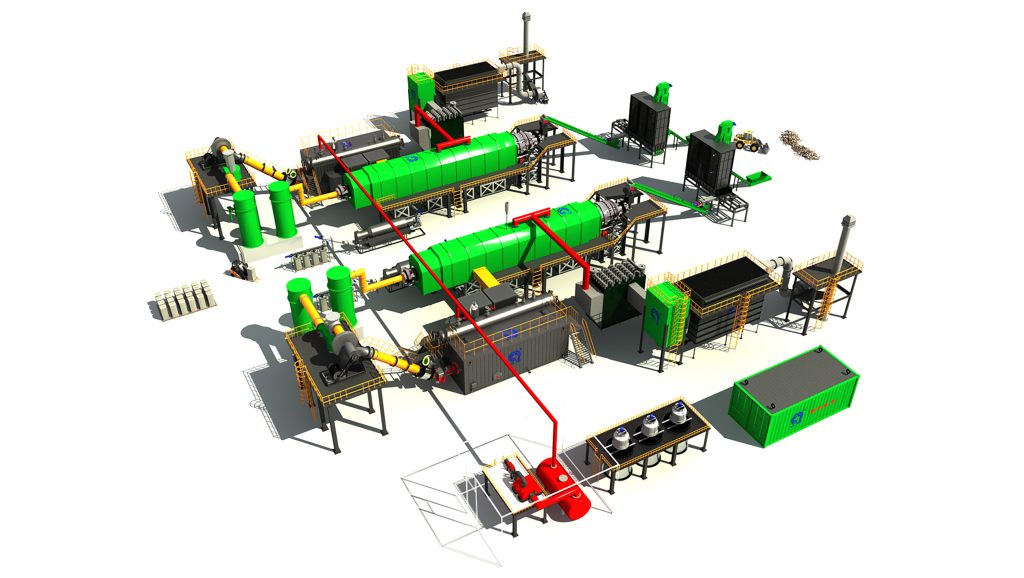
At its core, biochar is produced through the pyrolysis of biomass – heating organic material such as agricultural residues, forestry by-products, or organic waste under oxygen-limited conditions. Instead of allowing this biomass to decompose and release carbon dioxide back into the atmosphere, the process stabilizes a substantial portion of the carbon into a solid, aromatic structure. This structure is highly resistant to biological degradation and can persist in soils or materials for centuries, effectively removing carbon from the short-term carbon cycle.
What makes biochar particularly relevant in today’s climate discourse is not merely its ability to store carbon, but the fact that it does so through a process that is already technologically mature, modular, and compatible with existing biomass supply chains. Unlike many carbon removal technologies that remain capital-intensive or dependent on future infrastructure, biochar is being deployed today – at industrial scale, across multiple continents, and increasingly within formal carbon markets.
Technology and System Integration: Pyrolysis as a Platform
The underlying process of pyrolysis is well understood, yet recent innovation has transformed it from a rudimentary thermal conversion method into a sophisticated platform technology. Modern pyrolysis systems operate in controlled environments, typically between 350°C and 700°C, optimizing for carbon retention, energy recovery, and product consistency.
In addition to biochar, pyrolysis produces syngas and bio-oil. These co-products are not incidental; they are central to the economics and energy balance of the system. In many configurations, syngas is captured and reused to power the reactor itself, reducing or even eliminating external energy requirements. This creates systems that are not only carbon-negative but also energy-efficient.
A defining characteristic of contemporary biochar production is its modularity. Containerized pyrolysis units can be deployed close to biomass sources – on farms, at sawmills, or alongside municipal waste streams. This decentralized approach reduces transportation costs, minimizes emissions, and enables a distributed model of carbon removal. In contrast to centralized industrial solutions such as direct air capture, biochar systems scale horizontally, expanding through replication rather than concentration.
Equally important is the increasing sophistication of monitoring, reporting, and verification (MRV). Advances in analytical methods allow for precise measurement of carbon content and stability, while digital platforms enable traceability across the entire lifecycle – from feedstock sourcing to final carbon storage. This transformation from “black carbon” to a measurable, certifiable carbon asset is what underpins the rapid integration of biochar into carbon markets.
Market Landscape: From Fragmentation to Emerging Structure
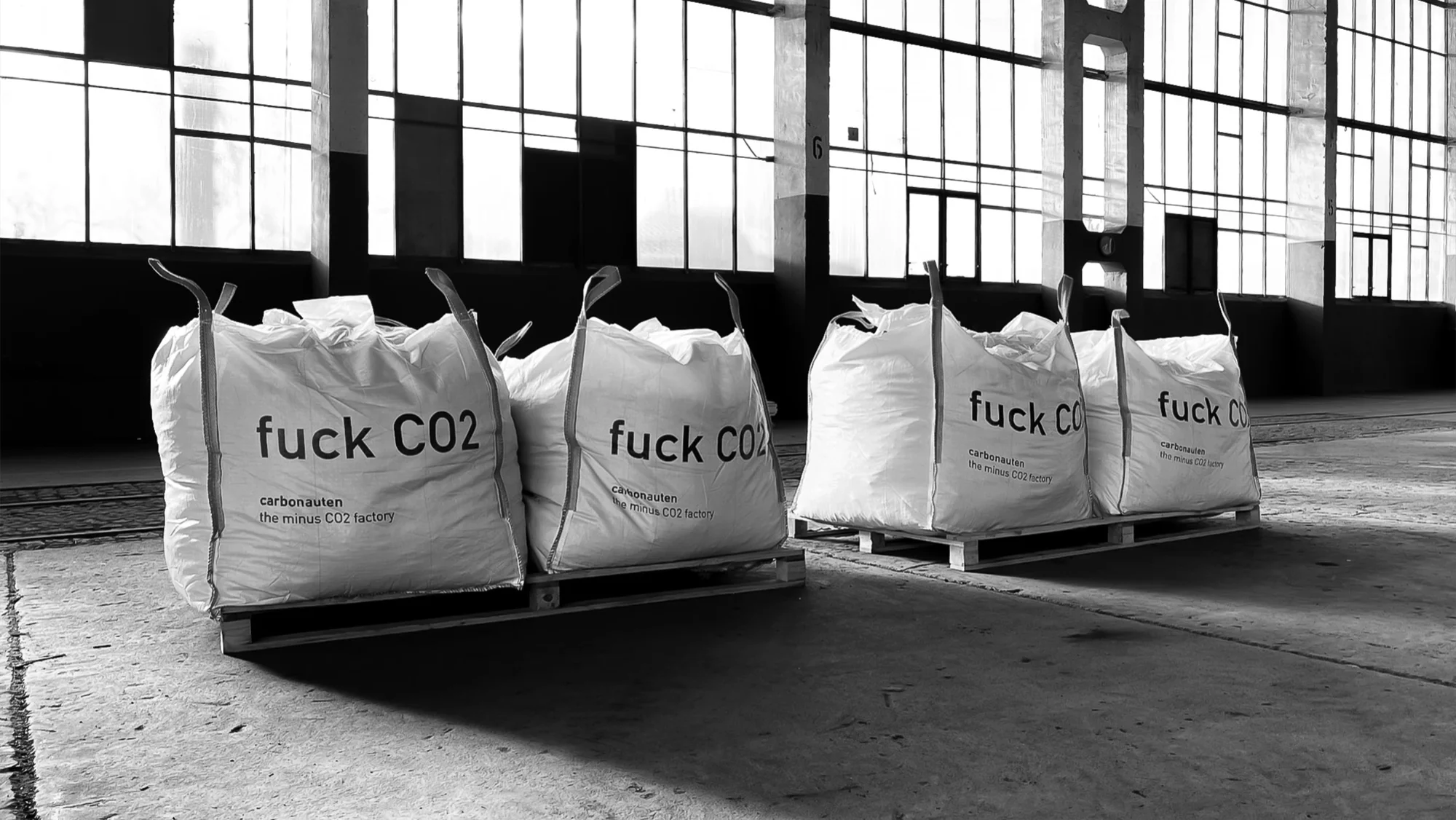

The biochar sector is still young, but it is evolving from a fragmented landscape of small-scale producers into a structured ecosystem with specialized roles across the value chain. Technology providers, carbon credit platforms, project developers, and end-users are beginning to align into a coherent market architecture.
Companies such as Pyreg are focusing on industrial-scale reactor systems, enabling reliable and standardized production. Others, like Carbo Culture, are pushing the boundaries of carbon permanence through high-temperature processes that maximize stability and credit value. Meanwhile, Carbonfuture is building the digital infrastructure required to track, verify, and monetize carbon removal outcomes.
On the demand side, corporate buyers are playing a decisive role. Companies with ambitious net-zero commitments are increasingly turning to durable carbon removal solutions to complement emissions reductions. Biochar has gained particular traction due to its combination of permanence, relatively low technological risk, and co-benefits.
Standards and registries are consolidating this market. Puro.earth has established one of the leading certification frameworks for biochar-based carbon removal, issuing CO₂ Removal Certificates (CORCs) that are actively traded. Organizations such as International Biochar Initiative and European Biochar Industry Consortium are contributing to the development of quality standards, sustainability criteria, and policy alignment.
This convergence of technology, verification, and market demand marks a critical transition: biochar is no longer a niche product, but an emerging asset class within the broader carbon economy.
Policy Environment: Alignment with Climate and Agricultural Agendas
Public policy is increasingly reinforcing this trajectory. In the European Union, biochar is being integrated into the evolving Carbon Removal Certification Framework, which aims to establish standardized rules for measuring and rewarding carbon removal activities. This aligns biochar with broader EU priorities, including soil health, circular economy strategies, and climate neutrality targets.
Source: https://climate.ec.europa.eu/eu-action/carbon-removal_en
In the United States, while biochar is not yet the primary focus of federal carbon removal incentives, it benefits indirectly from programs related to soil carbon, climate-smart agriculture, and carbon sequestration. The broader policy signal is clear: carbon removal is moving from voluntary markets toward structured regulatory support.
At the same time, voluntary carbon markets remain a key driver. Companies such as Microsoft, Shopify, and Stripe have committed significant resources to purchasing high-quality carbon removal credits. Biochar’s ability to deliver measurable and durable carbon storage makes it particularly attractive in this context, especially compared to nature-based solutions with higher uncertainty.
Differentiation: Why Biochar Stands Apart
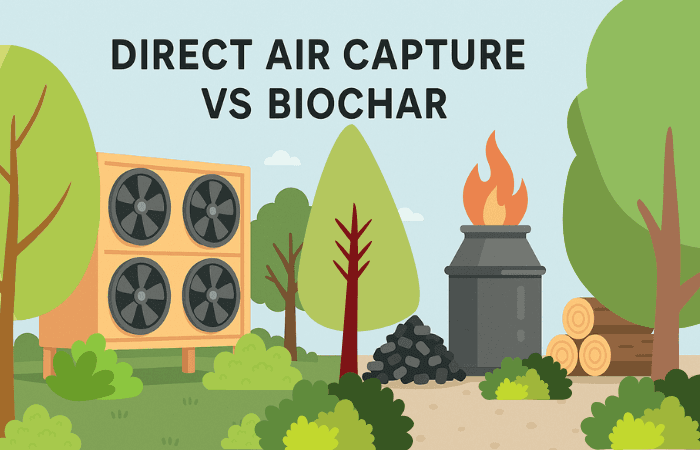
To understand the strategic importance of biochar, it is necessary to compare it with other carbon removal approaches – not at the level of theory, but in terms of deployment reality.
Unlike direct air capture or conventional carbon capture and storage, biochar does not rely on complex transport and storage infrastructure. There is no need for pipelines, compression systems, or geological reservoirs. Carbon is stabilized in solid form and stored directly in soils or materials, significantly reducing both cost and operational complexity.
Equally important is the decentralized nature of biochar systems. While many carbon removal technologies require large, centralized facilities, biochar can be produced wherever biomass is available. This enables a distributed model that is inherently more resilient and adaptable, particularly in regions with abundant agricultural or forestry residues.
Perhaps the most distinctive feature of biochar, however, lies in its co-benefits. When applied to soils, biochar can improve water retention, enhance nutrient availability, and support microbial activity. These effects can lead to increased agricultural productivity and reduced dependence on synthetic fertilizers. In addition, biochar systems can contribute to waste management solutions and reduce emissions of methane and nitrous oxide.
From an energy perspective, biochar production can be energy-neutral or even energy-positive, depending on system design. This contrasts sharply with technologies such as direct air capture, which require substantial external energy inputs.
Finally, biochar benefits from relatively robust measurement and verification. Carbon content can be directly quantified, and stability can be modeled with increasing precision. This provides a level of confidence that is often lacking in other carbon removal approaches, particularly those based on biological processes.
Constraints and Realistic Limits
Despite its advantages, biochar is not without limitations. The most fundamental constraint is the availability of sustainable biomass. Biomass is a finite resource, and it is already in demand across multiple sectors, including energy, materials, and fuels. As demand for carbon removal grows, competition for feedstock is likely to intensify.
There are also legitimate concerns related to land use. If not carefully managed, increased demand for biomass could lead to indirect land-use change or conflicts with food production. Ensuring sustainability therefore requires strict sourcing criteria and transparent supply chains.
In addition, the quality of biochar is not uniform. It depends heavily on feedstock selection and process conditions, which can affect both its agronomic properties and its carbon stability. Standardization efforts are ongoing, but variability remains a challenge.
Finally, the carbon market itself is still evolving. Prices for carbon removal credits are volatile, and long-term demand is not yet guaranteed. While current trends are favorable, the economic viability of biochar projects remains partly dependent on policy support and corporate climate commitments.
Conclusion: Biochar as a Foundational Layer of the Carbon Economy
Biochar is often presented as one option among many in the portfolio of carbon removal technologies. This perspective misses a more important point. Biochar is not just another solution – it represents a fundamentally different approach to carbon management.
It combines technological maturity with immediate deployability. It integrates into existing economic systems rather than requiring entirely new infrastructure. And it delivers multiple forms of value simultaneously, from carbon sequestration to soil regeneration and waste utilization.
As climate strategies evolve from emission reduction to active carbon removal, the role of biochar is likely to expand significantly. Not because it is perfect, but because it works – today, at scale, and within the constraints of the real economy.
In this sense, biochar is no longer merely a product or a practice. It is becoming a foundational layer of climate infrastructure, bridging the gap between natural systems and industrial carbon management.
Sources
- European Commission – Carbon Removal
https://climate.ec.europa.eu/eu-action/carbon-removal_en - Puro.earth
https://puro.earth - International Biochar Initiative
https://biochar-international.org - Carbonfuture
https://www.carbonfuture.earth - Verra
https://verra.org - IPCC Reports
https://www.ipcc.ch